|
|
|
|
|
|
|
|
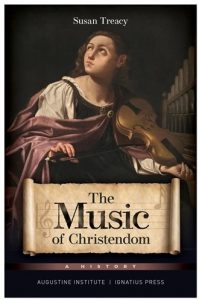
The Music of Christendom: A History, by Susan Treacy
Music plays such an important part in everyone’s life but how much do we know about the history of music? How did music shape our civilization and how was music itself shaped by the Catholic Church? Susan Treacy, an experienced professor of music, is an excellent guide to the history of music. Every Catholic should own at least one book on music. This is it.
Susan Treacy is Professor of Music Emerita at Ave Maria University. She holds the Ph.D. in Historical Musicology from University of North Texas and B.Mus. and M.Mus. degrees from Oberlin Conservatory and the Manhattan School of Music. Besides scholarly articles, she writes a column, “Musica Donum Dei”, for the Saint Austin Review (StAR), and has written A Plain and Easy Introduction to Gregorian chant (Cantica Nova Publications).
Published by the Augustine Institute | Ignatius Press 2021
ISBN: 9781950939213
180 pages, softcover
You can order it here: ORDER ONLINE
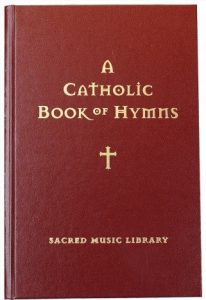 The Catholic Book of Hymns – Pew, hardcover
Nearly 300 classic, time-honored hymns your choir and congregation will love singing!
The hymn selections are musical, singable, truly sacred, theologically solid, and–for the most part–familiar, although you will also find some that are new to you. All 295 hymns use traditional hymn texts, not modern adaptations. This hymnal has been granted a nihil obstat and imprimatur, which mean the book is free from doctrinal error.
A Catholic Book of Hymns includes all you need for reverent, beautiful celebrations from Advent through Easter and the whole of ordinary time.
Download a list of all hymns here. Download sample pages here: SAMPLE PAGES
The 6- by 9-inch book fits easily into hymnbook racks on pews. This handsome book features Smyth-sewn binding, title stamped in gold foil, and a rich red simulated-leather cover that’s waterproof and extremely durable.
No permission is required to publish these hymns in bulletins or music handouts or to use them for Masses that are videotaped or live-streamed.
Published by Sacred Music Library, Frog Music Press.
You can order it online here: ORDER ONLINE
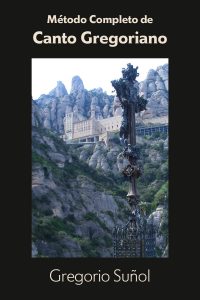 The newest book from CMAA is a companion to one that we have carried for years. Alongside the English edition of Dom Gregorio Suñol’s chant instruction book Gregorian Chant according to the Solesmes Method, we now have the same book in the original language, Spanish, as Método completo de canto gregoriano.
Dom Suñol, a monk of the abbey at Montserrat and the president of the Pontifical Academy of Sacred Music in Rome, wrote his chant teaching book in 1905, and for years it was expanded in numerous editions and translated into several languages. This new offering is a reprint of the eighth Spanish edition, from 1943.
The book is a thorough and methodical presentation based on the Solesmes method, which he praised in these words:
My teaching, I can say, is not mine. The school of Solesmes has served the Church so magnificently, restoring her chant to her, authentic, beautiful, serious, and suited to her holiness; it burst forth one day by inspiration of the Holy Spirit from the hearts of her most enlightened sons.
For a description in Spanish, or to place an order, have a look at the CMAA Shop site.
On Sunday, March 5, to mark the 50th anniversary of the Church’s Instruction on Music in the Liturgy Musicam sacram, over 200 musicians, pastors, and scholars published a declaration under the title “Cantate Domino canticum novum”.
The statement recalls the Second Vatican Council’s teaching which describes sacred music as “a treasure of inestimable value”, and it speaks of elements in common practice “that contribute to the present deplorable situation of sacred music and of the liturgy.”
We, the undersigned—musicians, pastors, teachers, scholars, and lovers of sacred music—humbly offer to the Catholic community around the world this statement, expressing our great love for the Church’s treasury of sacred music and our deep concerns about its current plight.
The statement calls on the Church to (1) reaffirm the musical heritage of the Roman rite: Gregorian chant and sacred polyphony; (2) give children an exposure to the beauty of true musical art; (3) promote the professional training of lay church musicians; (4) insist on high standards for music in cathedrals and basilicas; (5) encourage every parish to offer at least one fully sung Mass every Sunday; (6) provide musical training for the clergy, to enable them to sing their part of the liturgy; and (7) educate liturgists in the musical tradition of the Church.
These recommendations, along with a discussion of widespread failings in musical practice, are fleshed out in the full document, which is available here. Versions in five other languages can be reached through the coverage at our sister site New Liturgical Movement.
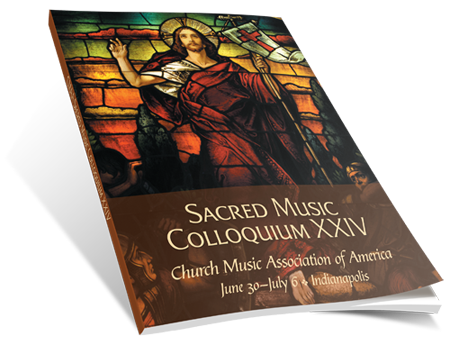 We’ve sent the 2014 Colloquium music packet to the printer—but you don’t have to wait for June 30 to see what’s inside.
You can download a high-res pdf, a somewhat smaller pdf, or an iPad-readable version of the 248-page packet right now.
For details about this year’s Colloquium, visit the event page.
And you can read much more about the event’s highlights—including profiles of conductors and presenters, hotel information, and more—here.